
Are there any government regulations regarding analog radio use?
As a supplier of analog radios, I've often been asked about government regulations surrounding their use. In today's digital age, where technology is advancing at an unprecedented pace, analog radios still hold a significant place in various sectors. From emergency services to marine operations and amateur radio enthusiasts, these devices continue to serve a crucial role. However, their use is not without its rules and regulations.
The Basics of Government Regulations
Government regulations regarding analog radio use are in place to ensure the efficient and safe operation of radio frequencies. These regulations are typically enforced by national regulatory bodies, such as the Federal Communications Commission (FCC) in the United States, Ofcom in the United Kingdom, and the Australian Communications and Media Authority (ACMA) in Australia.
One of the primary purposes of these regulations is to manage the radio spectrum. The radio spectrum is a finite resource, and different frequencies are allocated for specific uses. For example, certain frequencies are reserved for emergency services, while others are used for commercial radio stations or amateur radio operators. By regulating the use of these frequencies, governments can prevent interference between different radio users and ensure that critical services, such as emergency communications, are not disrupted.
Licensing Requirements
In many countries, using an analog radio requires a license. The licensing process varies depending on the type of radio and its intended use. For example, amateur radio operators typically need to pass an exam to obtain a license. This exam tests their knowledge of radio theory, regulations, and operating procedures. Once they have obtained a license, they are allowed to use specific frequencies and operate within certain power limits.
Commercial users, such as businesses and organizations, may also need to obtain a license to use analog radios. These licenses are often issued for specific frequencies and are subject to certain conditions. For example, a business may need to demonstrate that it has a legitimate need for using the radio and that it will comply with all relevant regulations.
Frequency Allocation and Restrictions
As mentioned earlier, different frequencies are allocated for specific uses. This means that not all frequencies are available for general use. For example, some frequencies are reserved for military use, while others are used for satellite communications. When using an analog radio, it is important to ensure that you are using the correct frequency for your intended purpose.
In addition to frequency allocation, there are also restrictions on the power output of analog radios. These restrictions are in place to prevent interference with other radio users. For example, in the United States, the FCC limits the power output of most amateur radio transmitters to 1,500 watts. Exceeding these power limits can result in fines and other penalties.
Safety and Interference
Government regulations also address safety and interference issues. For example, analog radios must meet certain safety standards to ensure that they do not pose a risk to users. These standards may include requirements for proper grounding, shielding, and protection against electrical shock.


In addition, regulations are in place to prevent interference between different radio users. Interference can occur when two or more radios are operating on the same frequency or when a radio is emitting signals that are outside of its allocated frequency range. To prevent interference, radio users are required to use the correct frequency and to ensure that their radios are properly tuned and maintained.
Impact on Analog Radio Suppliers
As an analog radio supplier, these regulations have a significant impact on our business. We must ensure that all of our products comply with relevant regulations and standards. This includes ensuring that our radios are designed to operate within the approved frequency ranges and power limits.
We also need to provide our customers with accurate information about the regulations and licensing requirements for using our products. This helps them to ensure that they are using our radios legally and safely. In some cases, we may need to assist our customers in obtaining the necessary licenses or in complying with other regulatory requirements.
Our Product Range
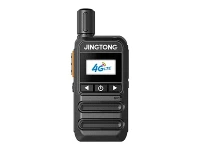
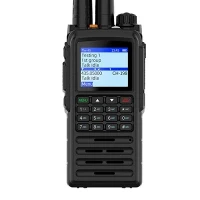
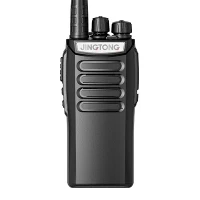
At our company, we offer a wide range of analog radios to meet the needs of different customers. Our products include Mini Analog Radio, which is a compact and portable radio ideal for personal use. We also have the Smart Portable Marine Radio, designed specifically for marine applications. For amateur radio enthusiasts, we offer the Dual Band Ham Radio Transceiver, which provides high-performance communication capabilities.
Conclusion
In conclusion, government regulations play a crucial role in ensuring the safe and efficient use of analog radios. These regulations cover a wide range of areas, including licensing, frequency allocation, safety, and interference. As an analog radio supplier, we are committed to complying with these regulations and providing our customers with high-quality products that meet their needs.
If you are interested in purchasing analog radios or have any questions about government regulations regarding their use, please feel free to contact us. We would be happy to assist you in finding the right radio for your needs and ensuring that you are using it legally and safely.
References
- Federal Communications Commission (FCC). (n.d.). Rules and Regulations. Retrieved from [FCC Website]
- Ofcom. (n.d.). Radio Regulations. Retrieved from [Ofcom Website]
- Australian Communications and Media Authority (ACMA). (n.d.). Radio Licensing and Regulations. Retrieved from [ACMA Website]