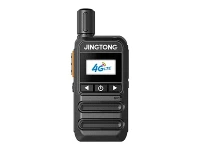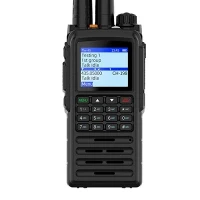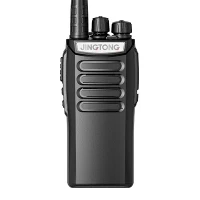

Hey there! As a supplier of Analog Two Way Radios, I often get asked about the signal strength of these nifty devices. So, let's dive right into it and figure out what signal strength in an analog two-way radio really means.
Understanding Signal Strength Basics
First off, signal strength is all about how powerful the radio wave is that's being sent and received by your analog two-way radio. It's measured in things like decibels (dB) or milliwatts (mW). A stronger signal means your radio can communicate over longer distances and with better clarity. Think of it like shouting - the louder you shout, the further away someone can still hear you.
In the context of analog two-way radios, there are a few key factors that can affect signal strength. One of the most important ones is the power output of the radio. Most of the analog two-way radios we offer, like the 5w UHF VHF Two Way Radio, have a power output of around 5 watts. A higher power output generally means a stronger signal, which translates to a longer range. But it's not just about the power; the antenna also plays a huge role.
The Role of the Antenna
The antenna is like the ear and mouth of your analog two-way radio. It sends out the radio signals and picks up incoming ones. A good antenna can significantly boost the signal strength. For example, a longer antenna can often catch more radio waves, which means a stronger signal. Some of our Analog Two Way Radio models come with adjustable antennas, allowing you to fine-tune the signal reception based on your needs.
The design of the antenna also matters. Different types of antennas are better suited for different frequencies. UHF (Ultra High Frequency) and VHF (Very High Frequency) are two common frequency bands used in analog two-way radios. UHF signals are better at penetrating obstacles like buildings and trees, but they have a shorter range compared to VHF signals. VHF signals, on the other hand, can travel further in open spaces but are more easily blocked by obstacles. Our 5W UHF Portable Handheld Walkie Talkie is designed to take advantage of the UHF frequency band's benefits, providing a strong signal even in urban or wooded areas.
Environmental Factors
The environment you're in can have a big impact on the signal strength of your analog two-way radio. In open areas like deserts or large fields, the signal can travel much further because there are fewer obstacles to block it. But in a city with lots of tall buildings or in a forest with thick trees, the signal can get weakened or even completely blocked.
Weather can also play a role. Rain, snow, and fog can all absorb or scatter radio waves, reducing the signal strength. However, our Analog Walkie Talkie models are designed to be fairly resilient to these environmental factors, with built-in features to help maintain a decent signal even in less-than-ideal conditions.
Measuring Signal Strength
So, how can you tell if your analog two-way radio has a good signal strength? Most modern radios have a signal strength indicator on the display. It usually shows up as a series of bars, similar to the signal strength indicator on your cellphone. The more bars you see, the stronger the signal.
You can also do a simple range test. Take two radios and start walking apart while communicating. Keep track of how far you can go before the signal starts to weaken or the audio becomes distorted. This will give you a good idea of the effective range of your radio in that particular environment.
Why Signal Strength Matters
Having a good signal strength is crucial for a reliable communication system. Whether you're using the radio for business purposes, like in a construction site or a security operation, or for personal use, like on a camping trip, you need to be able to count on clear and consistent communication.
A weak signal can lead to dropped calls, poor audio quality, and limited range. This can be a real problem when you're relying on the radio to coordinate activities or stay in touch with others. That's why investing in a high-quality analog two-way radio with a strong signal strength, like our Analog 2 Way Radio, is so important.
Improving Signal Strength
If you find that your analog two-way radio has a weak signal, there are a few things you can do to improve it. First, try adjusting the antenna. As mentioned earlier, a well-positioned antenna can make a big difference. You can also try moving to a higher location or an open area where there are fewer obstacles.
Another option is to use a repeater. A repeater is a device that receives a weak signal, amplifies it, and then retransmits it. This can significantly extend the range and improve the signal strength of your radio. However, using a repeater usually requires a license, so make sure to check the regulations in your area.
Conclusion
In conclusion, signal strength is a critical aspect of an analog two-way radio. It's determined by factors like power output, antenna design, environmental conditions, and more. By understanding these factors and taking steps to optimize the signal, you can ensure reliable communication with your radio.
If you're in the market for a high-quality analog two-way radio, look no further. We offer a wide range of Analog Two Way Radio options with excellent signal strength and other great features. Don't hesitate to reach out if you have any questions or if you're interested in placing an order. We're here to help you find the perfect radio for your needs.


References
"Handbook of Radio Frequency Design Techniques" by Louis E. Frenzel
"RF Circuit Design for Wireless Systems" by Chris Bowick