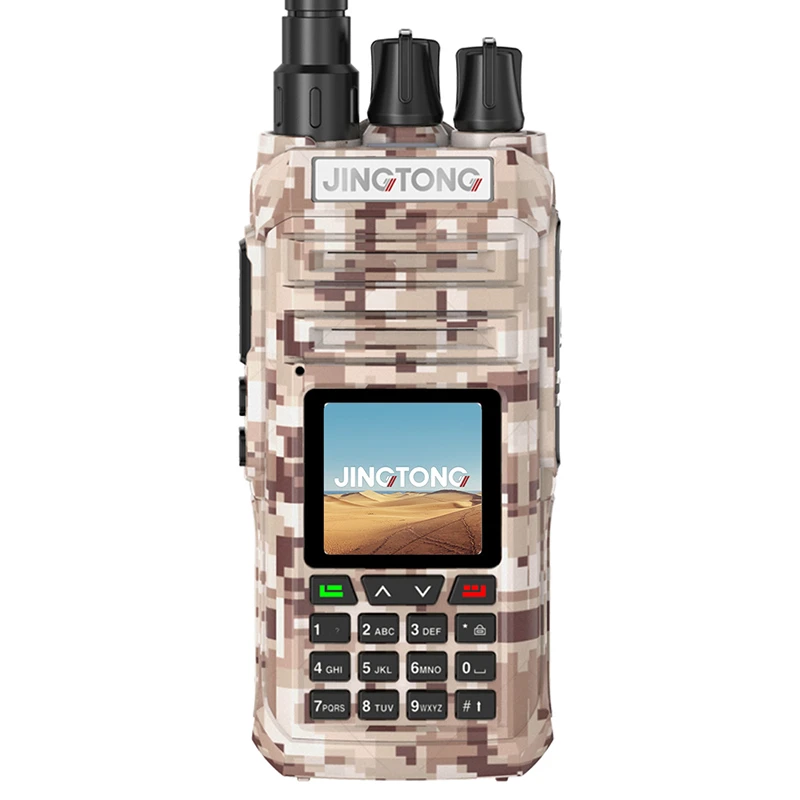

The Principle Behind the Relay Function in Dual-Mode Two-Way Radios
The relay function in dual-mode two-way radios employs a hybrid approach that combines both analog and digital modes. In digital mode, the dual-mode radio facilitates relaying through text messages or data communication; conversely, in analog mode, the relaying is achieved using standard two-way radio communication methods.
How the Relay Function Operates
The relay function in dual-mode radios requires the support of two radio units: one acts as the "relay unit," capable of receiving incoming signals and forwarding them to the other radio. In digital mode, the relay unit transmits the signal to the other radio via data transfer; in analog mode, the signal must be relayed through a dedicated repeater station channel.
Application Scenarios for the Relay Function
The relay function in dual-mode radios has a wide range of applications. For instance, it can be utilized in areas with no network coverage or weak network signals to effectively extend the communication range. In challenging terrains-such as mountains, islands, or forests-the relay function enables communication by establishing a repeater station. Furthermore, during large-scale events-such as exhibitions or concerts-this function facilitates extensive communication coverage across a broad area.