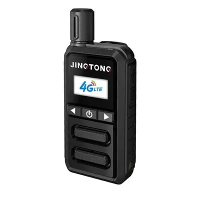

As a supplier of Analogue Ham Radio, I've witnessed the evolution and significance of these devices in the world of radio communication. Analogue Ham Radio, also known as amateur radio, has a rich history and continues to play a vital role in various communication scenarios. One of the key aspects of Analogue Ham Radio is the modulation methods used, which are essential for transmitting and receiving signals effectively.
Amplitude Modulation (AM)
Amplitude Modulation, commonly referred to as AM, is one of the oldest and most straightforward modulation methods in radio communication. In AM, the amplitude of the carrier wave is varied in proportion to the amplitude of the modulating signal. This means that the strength of the radio wave changes according to the audio or data being transmitted.
AM has several advantages. It is relatively simple to implement, making it accessible for amateur radio operators. It also has a wide bandwidth, which allows for the transmission of a rich audio spectrum. This makes it suitable for broadcasting applications, such as AM radio stations. However, AM is also susceptible to noise and interference, which can degrade the quality of the received signal.
In the context of Analogue Ham Radio, AM is still used in some applications, especially for long - distance communication. It can provide a reliable means of communication over large areas, although the quality may not be as high as some other modulation methods. For example, during emergency situations, AM can be used to broadcast important information to a wide audience.
Frequency Modulation (FM)
Frequency Modulation, or FM, is another popular modulation method in Analogue Ham Radio. In FM, the frequency of the carrier wave is varied in proportion to the amplitude of the modulating signal. This results in a signal that is less susceptible to noise and interference compared to AM.
FM offers several benefits. It provides high - quality audio transmission, making it ideal for voice communication. The audio fidelity is much better than AM, with a wider frequency response and less distortion. FM also has a higher signal - to - noise ratio, which means that the received signal is clearer and more reliable.
In the world of Analogue Ham Radio, FM is widely used for local and regional communication. It is commonly used for repeater systems, where the signal is received, amplified, and re - transmitted at a different frequency. This allows for extended communication range and better coverage. You can find many Portable Ham Radio devices that support FM modulation, which are perfect for on - the - go communication.
Single - Sideband Modulation (SSB)
Single - Sideband Modulation is a more advanced modulation method that offers several advantages over AM and FM. In SSB, only one of the sidebands of the modulated signal is transmitted, while the carrier and the other sideband are suppressed. This results in a more efficient use of bandwidth and power.
SSB has a higher power efficiency compared to AM, which means that more power can be directed towards the useful signal. It also has a better signal - to - noise ratio, making it suitable for long - distance communication. SSB is commonly used in amateur radio for long - haul communication, especially on the HF (High Frequency) bands.
There are two types of SSB: Upper Sideband (USB) and Lower Sideband (LSB). The choice between USB and LSB depends on the frequency band being used. Generally, USB is used on higher frequencies, while LSB is used on lower frequencies.
Phase Modulation (PM)
Phase Modulation is a modulation method where the phase of the carrier wave is varied in proportion to the amplitude of the modulating signal. PM is similar to FM in that it also varies a characteristic of the carrier wave based on the modulating signal. However, in PM, the phase changes rather than the frequency.
PM has some unique properties. It can provide a more compact signal in the frequency domain compared to FM. It is also less sensitive to amplitude variations in the received signal, which can be an advantage in some situations. However, PM is more complex to implement compared to FM and AM.
In Analogue Ham Radio, PM is not as commonly used as AM, FM, or SSB. But it can be useful in certain specialized applications, such as in some digital communication systems where phase - based modulation techniques are employed.
Pulse Modulation
Pulse Modulation is a family of modulation methods that use pulses to represent the information being transmitted. There are several types of pulse modulation, including Pulse Amplitude Modulation (PAM), Pulse Width Modulation (PWM), and Pulse Position Modulation (PPM).
Pulse Amplitude Modulation (PAM) varies the amplitude of the pulses according to the modulating signal. Pulse Width Modulation (PWM) changes the width of the pulses, while Pulse Position Modulation (PPM) changes the position of the pulses.
Pulse modulation is often used in digital communication systems, but it can also be applied in Analogue Ham Radio for certain applications. For example, in some data transmission scenarios, pulse modulation can be used to send digital information over the radio link.
Choosing the Right Modulation Method
When it comes to choosing the right modulation method for Analogue Ham Radio, several factors need to be considered. The type of communication (voice, data, or both), the distance of the communication, the available bandwidth, and the power requirements are all important considerations.

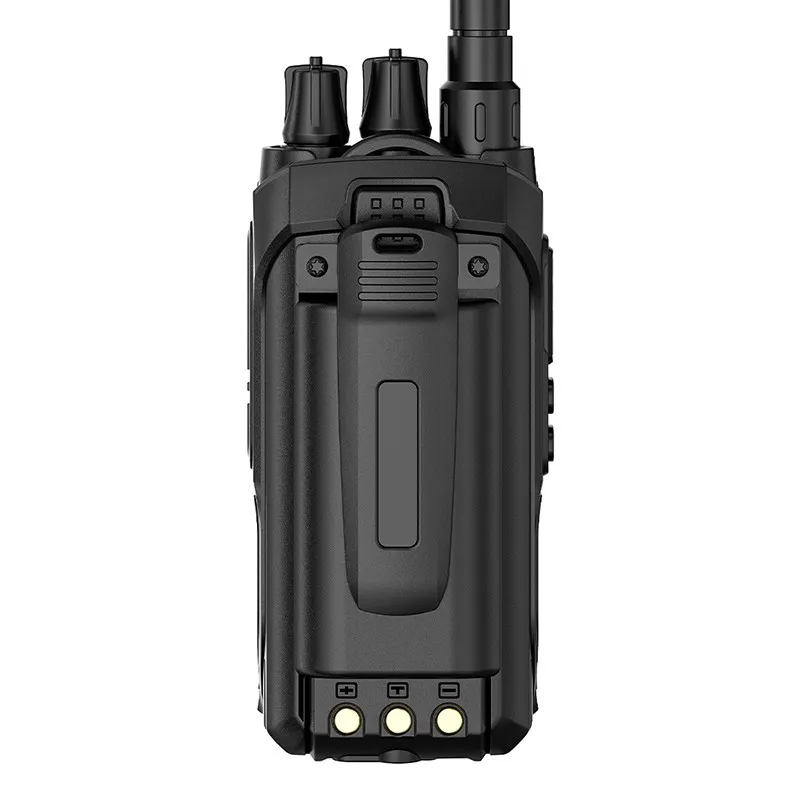
For short - range voice communication, FM is often a good choice due to its high - quality audio and resistance to noise. For long - distance communication, SSB is preferred because of its power efficiency and better signal - to - noise ratio. If you are looking for a simple and cost - effective solution for broadcasting, AM might be suitable.
As a supplier of Analogue Ham Radio, we offer a wide range of products that support different modulation methods. Our Bluetooth Two Way Radio devices are designed to provide reliable communication with the convenience of Bluetooth connectivity. We also have 10 Watt Ham Radio models that offer sufficient power for various communication needs.
If you are interested in purchasing Analogue Ham Radio equipment for your communication requirements, we invite you to contact us for a detailed discussion. Our team of experts can help you choose the right products based on your specific needs and preferences. We are committed to providing high - quality products and excellent customer service.
References
- "The ARRL Handbook for Radio Communications". American Radio Relay League.
- "Radio Communication Principles". McGraw - Hill.
- Various technical articles and research papers on radio modulation techniques.