

When people think about a warehouse, they usually think about shelves, forklifts, boxes, loading areas, and workers moving goods.
But behind all these activities, there is another important part that people do not always notice.
Communication.
A warehouse can be a very busy place.
Goods are arriving. Orders are being prepared. Forklifts are moving between different areas. Drivers are waiting outside. Warehouse staff are checking inventory, and supervisors need to know what is happening everywhere.
If communication is slow, small problems can quickly affect the whole workflow.
A truck may wait too long at the loading area.
A worker may go to the wrong storage zone.
A forklift operator may not know that one aisle is blocked.
These problems look small, but when they happen many times every day, they can reduce efficiency.
This is why reliable warehouse communication is important for daily operations.
The Communication Challenge Inside a Warehouse
Modern warehouses are often much larger than people expect.
Some facilities may include:
Receiving areas
Storage zones
Packing stations
Loading docks
Cold storage rooms
Office areas
Outdoor yards
Vehicle waiting areas
Workers in these areas may be far away from each other.
They also cannot always see what is happening in another part of the warehouse.
For example, a worker at the loading dock may need to contact the storage team.
A forklift driver may need confirmation before moving a large pallet.
A supervisor may need to ask several workers to change their tasks.
Walking across the warehouse every time is not practical.
Calling every employee by phone also takes too much time.
This is where a two-way radio for warehouse communication can help.
The worker presses the push-to-talk button and sends the message directly.
Simple, fast, and clear.
Why Mobile Phones Are Not Always Enough
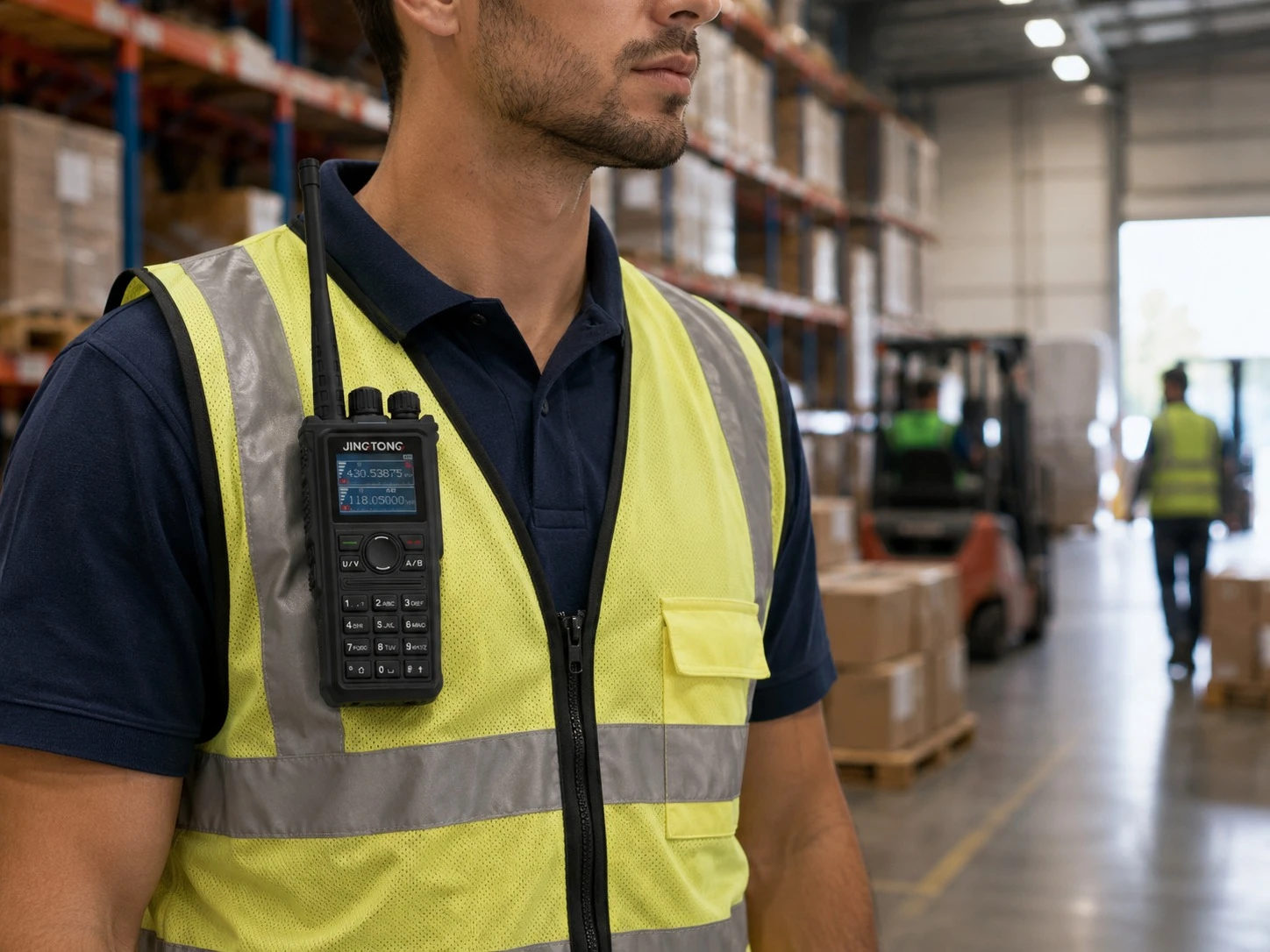
Mobile phones are useful, but warehouse work is different from office work.
Employees may be wearing gloves.
Their hands may be busy carrying boxes or operating equipment.
They may also be working in areas with a lot of noise.
Taking out a phone, unlocking it, searching for a contact, and waiting for someone to answer is not always convenient.
Text messages can also be missed.
A worker may not check the phone for several minutes.
But in warehouse operations, several minutes can matter.
A warehouse walkie talkie provides more direct communication.
Press the PTT button.
Speak.
The group hears the message.
There is no need to stop the work for a long time.
One Message Can Reach the Whole Team
One of the biggest advantages of two-way radios is group communication.
A warehouse supervisor can send one message to several workers at the same time.
For example:
"Loading dock two is ready."
"Move the next pallet to Zone B."
"Forklift needed in receiving area."
"Truck number three can enter now."
These messages are usually short.
But they help the whole warehouse move faster.
With mobile phones, the supervisor may need to contact several people separately.
With push-to-talk communication, one message can reach the full team.
This is especially useful during busy periods when many orders need to be handled.
Different Teams Need Different Communication
A warehouse is not only one team.
Different departments have different jobs.
Typical teams may include:
Receiving staff
Inventory workers
Forklift operators
Packing teams
Loading teams
Drivers
Security staff
Maintenance workers
Warehouse supervisors
Not every employee needs to hear every conversation.
Different radio channels or talk groups can help organize communication.
For example, forklift operators can use one channel.
Loading teams can use another.
Security staff can have their own communication group.
Supervisors may monitor several groups if needed.
This makes the warehouse communication system more organized.
Workers receive the information that is related to their job, instead of hearing too many unnecessary messages.
Clear Communication Around Forklifts and Vehicles
Safety is very important in warehouse environments.
Forklifts, trucks, pallet jacks, and workers may all move through the same area.
Sometimes visibility is limited.
Shelves can block the view.
Large pallets can also make it difficult for operators to see everything around them.
Communication can help reduce these risks.
For example, a worker can warn the team that a forklift is entering a narrow aisle.
Loading staff can confirm when the truck is ready.
A supervisor can stop movement in one area if there is a safety problem.
A professional two-way radio communication system allows this information to move quickly.
The radio does not replace safety rules.
But good communication helps safety rules work better.
Communication Between the Warehouse and Loading Dock
The loading dock is one of the busiest areas in many warehouses.
Trucks arrive.
Goods need to be checked.
Products need to be loaded or unloaded.
Drivers may also need instructions.
If the warehouse team and loading team do not communicate clearly, delays can happen easily.
For example, a truck may arrive before the storage area is ready.
Workers may prepare the wrong goods.
A loading dock may stay empty because the next truck has not been informed.
Using two-way radios for logistics operations, staff can share updates immediately.
The loading team can tell the warehouse when the truck arrives.
The warehouse can confirm when the goods are ready.
Security can also control vehicle entry.
This creates a smoother process.
Why DMR Radios Can Be Useful in Warehouses
Traditional analog radios can work well for many warehouse environments.
They are simple and easy to use.
However, larger warehouses may need more communication functions.
A DMR digital radio can be useful in this situation.
DMR radios can provide clear digital audio and better group communication.
Depending on the system, they may support:
Group calls
Private calls
Emergency alarms
Different talk groups
Contact management
Text messaging
For a large warehouse with many teams, these functions can make communication more organized.
Digital audio can also help in noisy working areas.
But the radio system should still be tested inside the real warehouse.
Metal shelves, concrete walls, and building size can all affect radio performance.
Large Logistics Operations May Need PoC Radios
Some logistics companies do not work inside only one warehouse.
Their operation may include:
Several warehouses
Distribution centers
Delivery drivers
Outdoor storage areas
Offices
Transport stations
Traditional radios are good for local communication, but they have distance limits.
When teams are working across different locations, a PoC radio can provide another option.
PoC means Push-to-Talk over Cellular.
A 4G LTE PoC radio uses mobile networks to provide wide-area communication.
This means a driver can talk with warehouse staff even when they are many kilometers away.
A manager at the office can also communicate with workers at different warehouses.
The operation is still similar to a normal walkie talkie.
Press the button and speak.
For logistics companies with multiple locations, this can make communication more flexible.
Faster Communication Helps Reduce Waiting Time
Waiting time is a common problem in warehouses.
A worker may wait for instructions.
A forklift may wait for the next pallet.
A truck may wait outside the loading dock.
A maintenance worker may not know that equipment has stopped.
Every delay may only be several minutes.
But together, they can become many hours over a long period.
Fast radio communication helps reduce unnecessary waiting.
Workers can ask questions immediately.
Supervisors can send updates quickly.
Drivers can receive new instructions without walking back to the office.
This can improve daily efficiency.
For a busy warehouse, saving a few minutes many times per day can make a real difference.
Communication During Equipment Problems
Warehouse equipment sometimes has problems.
A forklift may stop working.
A conveyor belt may have an issue.
A loading door may not open correctly.
When this happens, workers need to contact maintenance quickly.
Without a radio, the worker may need to leave the working area and find the maintenance team.
This wastes time.
With a professional two-way radio, the worker can report the problem immediately.
Maintenance staff receive the message and can prepare the right tools before arriving.
This simple process can help reduce equipment downtime.
The Radio Should Be Easy to Carry
Warehouse workers move a lot.
They walk between shelves, operate machines, carry goods, and sometimes work long shifts.
Because of this, the radio should not become a burden.
A good warehouse radio should be:
Easy to carry
Simple to operate
Comfortable for long working hours
Loud enough for noisy environments
Strong enough for daily use
Equipped with reliable battery life
The PTT button should also be easy to find.
Workers should not need to look at the radio every time they want to speak.
In many warehouse jobs, simple operation is more important than having too many complicated functions.
Battery Life Matters During Long Shifts
Many warehouses operate for long hours.
Some facilities may even run 24 hours per day with different shifts.
If the radio battery cannot last through the work shift, communication may be interrupted.
This creates another problem for supervisors.
They need extra batteries or charging stations.
For this reason, battery life is an important part of choosing a warehouse walkie talkie.
Workers should be able to use the radio through their normal shift without worrying too much about charging.
USB Type-C charging can also be useful for some working environments because charging becomes easier.
Communication Is Part of Warehouse Efficiency
Warehouse efficiency is not only about faster forklifts or better software.
People still need to communicate.
A warehouse management system may tell workers where products are located.
But real situations can change.
A pallet may block an aisle.
A truck may arrive late.
Equipment may stop working.
An urgent order may suddenly become more important.
Workers need a fast way to share this information.
This is why communication remains important even in highly automated warehouses.
Technology can manage data.
But workers still need to talk with each other.
Choosing the Right Radio for Warehouse Operations
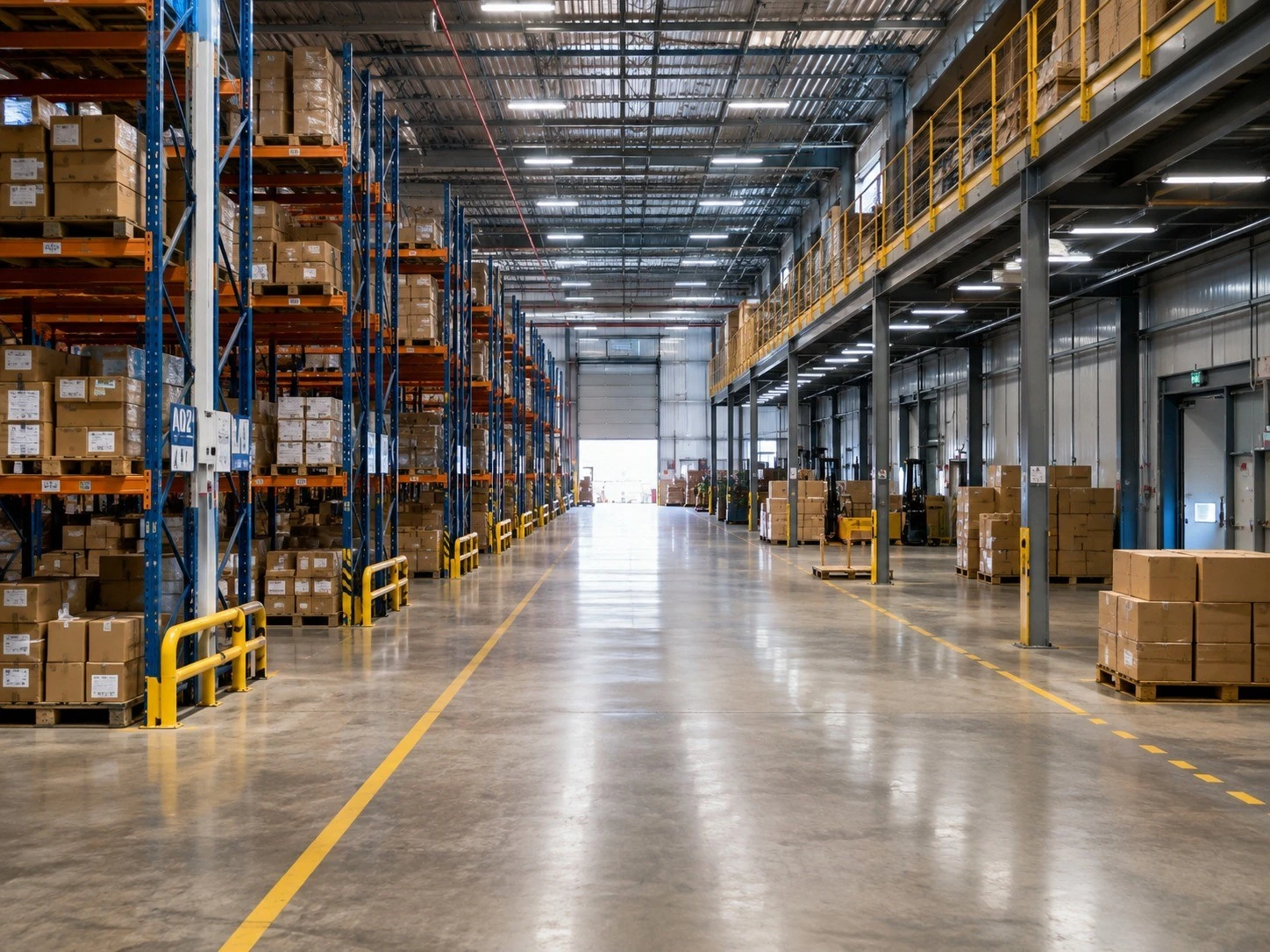
Before choosing radios, warehouse managers should understand how their teams actually work.
Some useful questions include:
How large is the warehouse?
Are there many metal shelves?
How many floors are there?
Are workers also located outdoors?
How many teams need separate channels?
Is mobile network coverage stable?
Do drivers need to communicate outside the warehouse?
How long is each work shift?
Is emergency communication required?
For one local warehouse, analog or DMR radios may be enough.
For multiple warehouses or delivery teams, PoC radios may be more suitable.
Some logistics companies may also use both.
The right communication solution depends on the real working environment.
Conclusion
A warehouse can look simple from the outside.
Goods arrive.
Products are stored.
Orders are packed.
Trucks leave.
But behind this process, many people need to work together.
Receiving staff, forklift operators, packing teams, drivers, supervisors, security staff, and maintenance workers all depend on communication.
A reliable warehouse communication system helps these teams exchange information faster.
Traditional two-way radios can provide direct local communication.
DMR radios can offer better group management.
PoC radios can connect workers across wider areas.
Different technologies have different advantages.
But the goal is always the same.
Get the right message to the right worker, at the right time.
When communication becomes faster, the whole warehouse can move faster too.
Recommended Communication Device for Warehouse Teams
For warehouses, logistics centers, distribution teams, and drivers who need simple and wide-area communication, the JINGTONG K2 4G LTE PoC Radio can be a practical option.
Its compact and lightweight design makes it easier for workers to carry during long shifts.
Through a compatible PoC platform, warehouse staff, drivers, supervisors, and logistics teams can communicate using instant push-to-talk over 4G networks.
For companies operating across warehouses, loading areas, offices, and transport routes, the K2 can provide a flexible PoC radio solution for daily logistics communication.