

Adjacent channel rejection is a critical specification in the realm of UHF (Ultra High Frequency) and VHF (Very High Frequency) handheld ham radios. As a supplier of UHF VHF handheld ham radios, understanding and communicating this parameter is essential for both the technical enthusiasts and potential buyers.
To begin with, let's define adjacent channel rejection. In a communication system, the radio spectrum is divided into numerous channels. Adjacent channels are those that are immediately next to the one in which a specific radio is operating. Adjacent channel rejection (ACR) refers to the ability of a radio receiver to reject signals from these neighboring channels while still being able to receive and process the desired signal clearly.
For UHF and VHF handheld ham radios, the importance of ACR cannot be overstated. In congested radio environments, where multiple users are operating on nearby frequencies, a radio with poor adjacent channel rejection may pick up unwanted signals from adjacent channels. These interfering signals can distort the intended communication, resulting in decreased audio quality, higher error rates, and in some cases, complete loss of the desired signal.
The measurement of adjacent channel rejection is typically expressed in decibels (dB). A higher dB value indicates better rejection of adjacent channel signals. For example, if a radio has an adjacent channel rejection of 60 dB, it means that the receiver can suppress signals from adjacent channels by a factor of 1,000,000 (since each 20 dB represents a ten - fold decrease in power). Radios with excellent ACR ratings can maintain clear communication even in the presence of strong adjacent channel interference.
Several factors affect the adjacent channel rejection of UHF VHF handheld ham radios. One of the primary factors is the design of the radio's front - end filtering. The front - end filter is responsible for allowing the desired frequency band to pass through while blocking unwanted frequencies. High - quality filters with sharp cut - off characteristics can significantly improve ACR. For instance, a well - designed surface acoustic wave (SAW) filter can provide excellent adjacent channel rejection due to its ability to precisely select the desired frequency range and reject neighboring frequencies.
Another factor is the selectivity of the radio's receiver. Selectivity refers to the ability of the receiver to distinguish between the desired signal and other signals in the frequency spectrum. A receiver with high selectivity can better isolate the desired signal from adjacent channel interference. This can be achieved through advanced circuit design, such as the use of multiple stages of filtering and amplification, as well as the implementation of digital signal processing techniques.
The quality of the radio's local oscillator also plays a role in adjacent channel rejection. A stable and accurate local oscillator is necessary to ensure that the receiver can tune precisely to the desired frequency. Any instability or inaccuracy in the local oscillator can cause the receiver to be more susceptible to adjacent channel interference.
As a UHF VHF handheld ham radio supplier, we offer a range of radios with different adjacent channel rejection capabilities to meet the diverse needs of our customers. Our Dual Band Ham Radio Transceiver is designed to operate on both UHF and VHF bands, providing users with increased flexibility in communication. With its advanced front - end filtering and high - selectivity receiver, this radio offers excellent adjacent channel rejection, ensuring clear and reliable communication even in challenging environments.
Our Best Analog Ham Radio is another great option for those who prefer analog communication. This radio is engineered with a focus on maximizing adjacent channel rejection, allowing users to enjoy interference - free communication. It is suitable for a variety of applications, from amateur radio enthusiasts to professional users in industries such as security and event management.
For those who require the latest technology, our Bluetooth Two Way Radio combines the convenience of Bluetooth connectivity with high - performance adjacent channel rejection. This radio can be paired with other Bluetooth devices, such as smartphones or headsets, while still maintaining excellent signal quality in the presence of adjacent channel interference.
Our Handheld Walkie Talkie is a popular choice for its portability and ease of use. Despite its compact size, it is equipped with a robust receiver that offers good adjacent channel rejection, making it suitable for on - the - go communication in various settings.
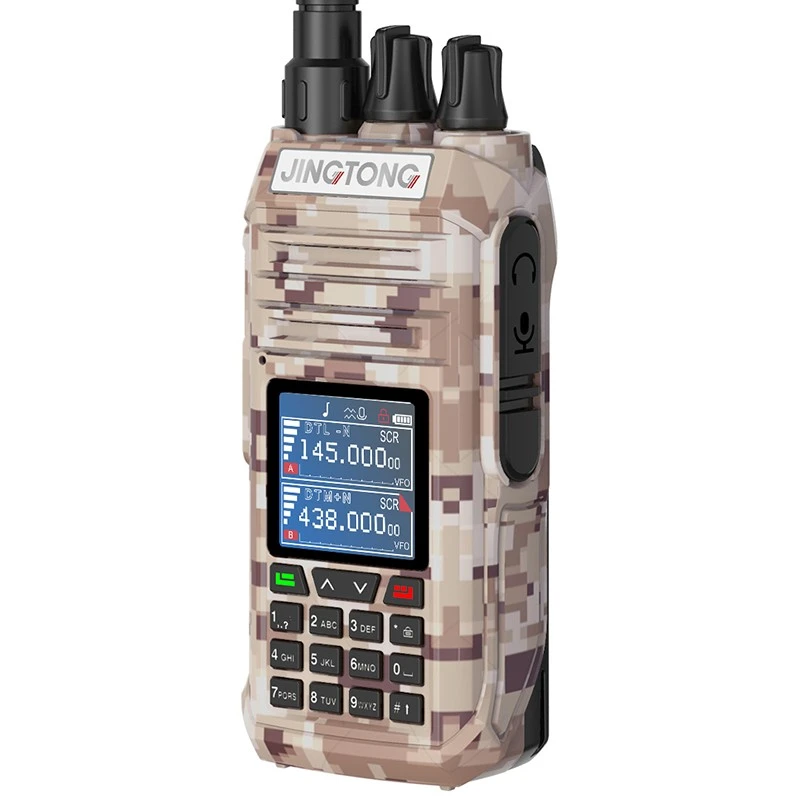

In addition, our IP67 Waterproof Two Way Radio is designed to withstand harsh environmental conditions. Along with its waterproof and dust - proof features, it also provides reliable adjacent channel rejection, ensuring that communication is not disrupted even in wet or dirty environments.
When choosing a UHF VHF handheld ham radio, it is important for customers to consider the adjacent channel rejection specification based on their specific usage scenarios. For example, if you plan to operate in a crowded urban area with many radio users, a radio with a high ACR rating is recommended to avoid interference. On the other hand, if you are using the radio in a less congested rural area, a radio with a moderate ACR may be sufficient.
We understand that each customer has unique requirements, and we are here to assist you in selecting the most suitable radio. Whether you are a novice ham radio operator or an experienced professional, our team of experts can provide you with detailed information about the adjacent channel rejection capabilities of our products and help you make an informed decision.
If you are interested in our UHF VHF handheld ham radios and would like to discuss your procurement needs further, please feel free to reach out to us. We are more than happy to engage in a detailed purchase negotiation to ensure that you get the best radio solution for your specific requirements.
References
- Radio Frequency Engineering Handbook, John Wiley & Sons
- Principles of Communication Systems, McGraw - Hill Education


