
Can Long Range Analog Radio be used for amateur radio communication?
Amateur radio, also known as ham radio, has been a popular hobby for decades, offering enthusiasts the opportunity to communicate over long distances, experiment with radio technology, and connect with like - minded individuals around the world. In recent years, there has been a growing interest in the use of long - range analog radios for amateur radio communication. As a supplier of long - range analog radios, I am well - positioned to explore this topic in depth.
The Basics of Long - Range Analog Radio
Long - range analog radios operate on analog signals, which are continuous waveforms that represent the audio or other information being transmitted. These radios are designed to provide reliable communication over relatively long distances, typically using higher power outputs and optimized antenna systems.
One of the key advantages of long - range analog radios is their simplicity. Unlike digital radios, which require complex encoding and decoding processes, analog radios operate on a straightforward principle of modulating a carrier wave with the audio signal. This simplicity makes them easy to use and maintain, even for novice radio operators.
Another advantage is their compatibility with a wide range of existing radio equipment. Many amateur radio operators have been using analog radios for years, and long - range analog radios can easily integrate into their existing setups. This means that operators can upgrade their communication capabilities without having to replace all of their equipment.
Suitability for Amateur Radio Communication
Long - range analog radios can be an excellent choice for amateur radio communication for several reasons.
Range and Coverage
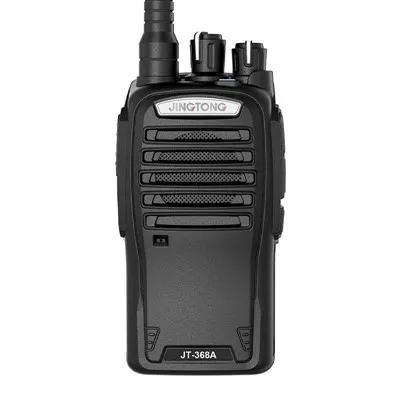
Amateur radio operators often seek to communicate over long distances, whether it's chatting with fellow hams in neighboring cities or making international contacts. Long - range analog radios are designed to provide extended coverage, thanks to their higher power outputs and efficient antenna designs. For example, a Long Range 5w Radio Walkie Talkie can offer a significant range, allowing operators to reach farther than with lower - power devices.
Reliability
In many cases, analog signals are more reliable than digital signals, especially in areas with poor signal quality or interference. Analog radios are less susceptible to issues such as packet loss or signal degradation that can occur with digital transmissions. This reliability is crucial for amateur radio communication, where clear and consistent communication is essential.
Cost - Effectiveness
Long - range analog radios are generally more affordable than their digital counterparts. This makes them an attractive option for amateur radio operators who are on a budget or who do not require the advanced features of digital radios. For example, a 5w UHF VHF Two Way Radio offers a cost - effective solution for long - range communication without breaking the bank.
Learning and Experimentation
Amateur radio is not only about communication but also about learning and experimentation. Analog radios provide a great platform for operators to understand the basic principles of radio communication, such as modulation, frequency selection, and antenna design. They allow operators to tinker with the equipment and gain a deeper understanding of how radio waves work.
Limitations of Long - Range Analog Radio in Amateur Communication
While long - range analog radios have many advantages, they also have some limitations when it comes to amateur radio communication.


Limited Features
Compared to digital radios, analog radios have fewer features. Digital radios can offer features such as encryption, data transfer, and advanced signal processing, which are not available in analog radios. This can be a drawback for operators who require these advanced features for their communication needs.
Spectrum Limitations
The analog radio spectrum is becoming increasingly crowded, which can lead to interference and reduced performance. As more and more users are using radio frequencies, it can be challenging to find a clear channel for communication. This is especially true in urban areas where there is a high density of radio users.
Audio Quality
Although analog radios can provide clear audio in many cases, the audio quality may not be as high as that of digital radios. Digital radios use advanced encoding techniques to improve audio quality and reduce background noise, which can be an advantage in certain communication scenarios.
Applications of Long - Range Analog Radio in Amateur Communication
Despite their limitations, long - range analog radios have a wide range of applications in amateur radio communication.
Emergency Communication
In times of emergencies, such as natural disasters or power outages, long - range analog radios can be a reliable means of communication. They do not rely on external power sources or network infrastructure, making them ideal for emergency situations. Amateur radio operators can use these radios to coordinate relief efforts, share information, and provide assistance to those in need.
Field Operations
Amateur radio operators often engage in field operations, such as hiking, camping, or remote exploration. Long - range analog radios are lightweight and portable, making them easy to carry in the field. They can provide reliable communication over long distances, allowing operators to stay in touch with their fellow hams or call for help if needed.
Community Building
Amateur radio is a community - based hobby, and long - range analog radios play an important role in bringing people together. Operators can use these radios to connect with other hams in their local area or around the world, sharing experiences, knowledge, and stories. This sense of community is one of the main attractions of amateur radio.
Conclusion
In conclusion, long - range analog radios can be a valuable tool for amateur radio communication. They offer several advantages, including extended range, reliability, cost - effectiveness, and a great platform for learning and experimentation. While they do have some limitations, such as limited features and spectrum limitations, they are still well - suited for many amateur radio applications, especially in emergency and field situations.
If you are an amateur radio operator or are interested in getting into the hobby, I encourage you to consider our range of Analog Two Way Radio. Our long - range analog radios are designed to provide reliable and efficient communication, and we are committed to providing high - quality products and excellent customer service. If you have any questions or are interested in purchasing our products, please feel free to contact us for a procurement discussion.
References
- ARRL Handbook for Radio Communications. American Radio Relay League.
- Radio Communication Principles. McGraw - Hill.
- Amateur Radio Today Magazine.